How much does a website actually cost in 2026?
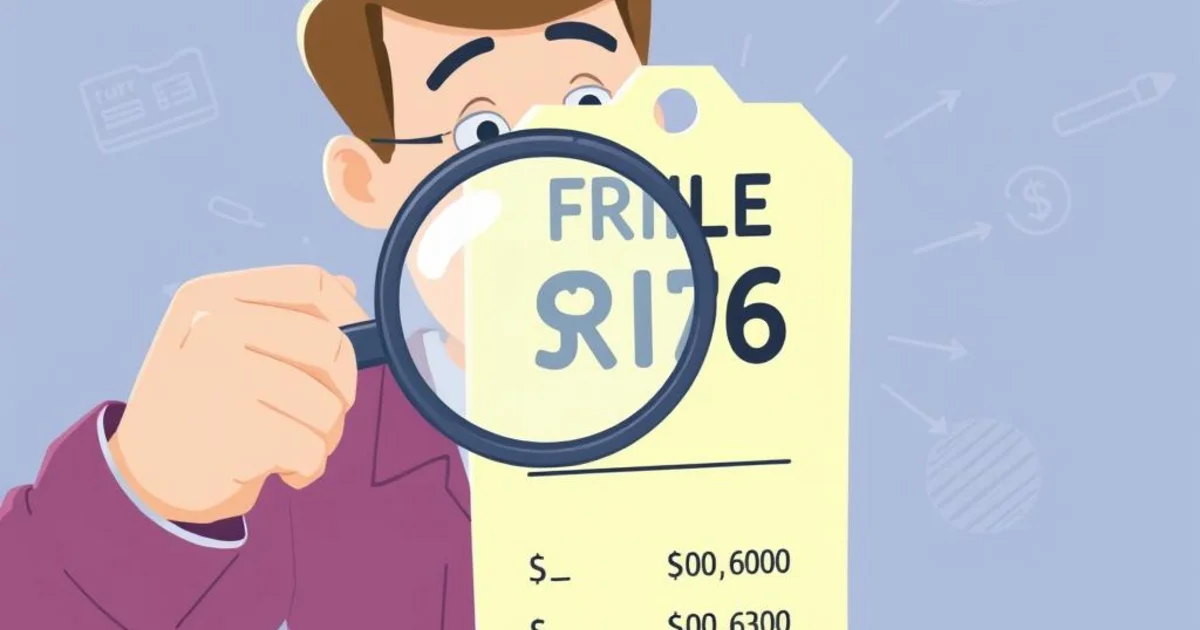
The essentials: A professional website costs between €800 and €10,000 in 2026 depending on its complexity. The real cost is not in the technology, but in what people forget to budget: content, SEO, maintenance, and post-launch requests. A “cheap” site often costs triple in the long term.
What you will learn:
- The real prices by site type in 2026, sourced and verified
- The 4 factors that explain the difference between a €500 quote and a €5,000 one
- Why a “cheap” site can cost you 3 times more
- The 3 questions to ask your service provider before signing
Before continuing: This article is for SMB directors who want to create their first site or redesign an existing one. If you are looking for a complex web application with custom features (SaaS, marketplace), the figures presented here will be too low for your project.
Published on June 18, 2026 Ӣ Updated on June 18, 2026
A craftsman recently told me: “My website cost me €500. And in 3 years, it didn’t bring me a single client. Ultimately, it cost me 3 years of lost revenue.”
This is the number one problem with SMB websites. The price shown on the quote has almost nothing to do with what the site will actually cost — or bring in. And if you are in this situation, the good news is that you are not the only one — and there are solutions.
The problem: 1 in 3 businesses does not have a website (France Num, 2025). And among those that do, many paid for a tool that brings them nothing.
The solution: I will break down the real rates of a website in 2026, by project type, with the traps to avoid.
The proof: The following figures come from France Num (the French government portal), documented field feedback, and my experience with SMBs that have already paid for a site once.
What is the Total Cost of Ownership (TCO) of a website?
The total cost of ownership (TCO) of a website is the sum of all direct and indirect costs over its entire lifespan, generally 3 to 5 years. Unlike the purchase price shown on the quote, the TCO includes hosting, domain name, SSL certificate, technical maintenance, content updates, potential redesigns, and the time spent by the team managing the site. According to data from France Num and web agency feedback, a showcase site purchased for €2,000 will have a 3-year TCO between €2,720 and €7,200, with most recurring costs coming from maintenance and post-launch modifications. The industry rule of thumb is simple: the cost of ownership of a website represents 30% to 50% of the purchase price each year. This is why a “cheap” €500 site can cost more than a €3,000 site if hidden fees have not been anticipated — and especially if the site generates no clients, which represents an opportunity cost much higher than the purchase price.
Why do website prices vary so much from one service provider to another?
Quite simply because we are not selling the same thing. A €500 site, a €2,500 site, and an €8,000 site are not three versions of the same product at different margins — they are three different products.
| Solution | Average Price | For Whom? |
|---|---|---|
| No-code platform (Wix, Webflow) | €300 – €1,000 | Freelancers, SMBs on a small budget |
| Freelancer | €800 – €3,000 | Customized showcase website |
| Web agency | €1,500 – €10,000 | Company with brand image, SEO, content |
| E-commerce site | €2,000 – €30,000 | Online sales, catalog, payment, logistics |
These ranges come from France Num and the Toonet Creation agency. But the final price depends mainly on four factors that I will detail. The first is the level of customization. A standard template costs €500 to €1,000. A custom design with animations, original illustrations, and a thought-out conversion funnel starts at a minimum of €3,000-€5,000.
The second is the number of pages. A 5-page showcase site and a 30-page site with city landing pages optimized for local SEO do not represent the same volume of work. The difference is measured in days of writing and layout design.
The third is content. This is the biggest blind spot in quotes. Many providers sell you “a website” without including copywriting, SEO optimization, or professional photos. You discover after signing that it’s up to you to provide everything — and that your texts are not designed for Google.
The fourth is the level of service included. An €800 freelancer delivers a site. A €4,000 agency delivers a site + a content strategy + SEO guidance + training to update it yourself. The difference is in the consulting time, not the pure technology.
“The real cost factor is not the tool, but the content, the SEO, and the guidance.” — Vincent Burkic, web consultant at Toonet Creation
Showcase website, e-commerce, one-page: which type of website suits you best?
Before looking at prices, the first question to ask yourself is: what do you want your site to do? Because the budget is not the same depending on the answer.
The one-page website (or “business card”): a single page presenting your activity, contact details, and a contact form. This is the minimum viable option for a craftsman or a freelancer who wants to exist online. Budget: €500 to €2,000 according to France Num. This is sufficient for a plumber, an electrician, a coach — if local SEO is properly executed afterward.
The showcase website (5-10 pages): multiple pages dedicated to your services, your portfolio, your team, along with a blog. This is the standard format for an SMB that wants to be found on Google for several queries. Budget: €1,500 to €5,000 with a freelancer or agency. This is the format I recommend to 80% of the SMBs I work with.
The e-commerce website: product catalog, online payment, inventory management, conversion funnel. The budget skyrockets due to technical complexity. France Num estimates €3,000 to €10,000 for a basic e-commerce site. Add 5% to 15% in platform commissions on sales if you use Shopify, or €5 to €200/month for hosting if you self-host.
The custom platform: complex web application, marketplace, SaaS. Budget: €10,000 minimum, often €30,000 to €80,000. Out of the scope of this article.
| Website Type | Minimum Budget | Recommended Budget | Monthly Maintenance |
|---|---|---|---|
| One-page / business card | €500 | €1,200 – €2,000 | €5 – €20 |
| Showcase site (5-10 pages) | €1,500 | €2,500 – €5,000 | €20 – €100 |
| E-commerce (up to 200 products) | €2,000 | €5,000 – €15,000 | €50 – €200 |
| Custom platform | €10,000 | €30,000 and more | €100 – €500+ |
What justifies the difference between a €500 website and a €5,000 website?
The answer can be summarized in one sentence: everything that is not in the quote.
A €500 website is often a template purchased for €50, filled with your texts in an afternoon, delivered without an SEO strategy, without training, and without maintenance. The provider got paid for their day of work — and you have a website. But not a tool that brings in clients.
A €5,000 website represents several days of work: strategic framing (understanding your market, your clients, your competitors), information architecture (organizing pages so Google understands), SEO copywriting, custom design, technical optimization (speed, mobile, accessibility), training, and documentation.
What I learned in the field: I have seen dozens of SMBs come to me with a WordPress site purchased for €600 two years earlier. In almost every case, the site was slow, poorly structured, and invisible on Google. The owner didn’t even know where it was hosted. A complete redesign was required: the €600 site ultimately cost them €2,500. And there is an additional trap that almost no one anticipates: post-launch requests.
A developer delivered a restaurant website for $2,500. After delivery, the client sent 15 “minor requests” in two months: changing the reservation button, adding the menu PDF, modifying the header animation. Result: 12 hours of free work. When the developer announced they would charge for future modifications, the client left a 1-star Google review for “hidden fees.”
The client was not acting in bad faith. They simply felt their site “wasn’t finished” until everything was perfect. And this divergence in perception is costly — for both sides.
How much does a cheap website actually cost?
A provider who rebuilds “budget” websites documented the 6 problems they consistently find in clients who come to them for help after a failed first website.
1. Disastrous speed. Bloated WordPress themes, randomly installed plugins, never-compressed images. Result: the site takes 5 to 10 seconds to load. Google penalizes, and visitors leave.
2. No narrative structure. The site reads like a generic advertising brochure: “We are committed to excellence, quality, and customer satisfaction.” The visitor understands neither what you do nor why you are different from your competitors.
3. No conversion logic. “Contact Us” buttons placed everywhere without thinking about the visitor’s journey. Nothing guides the potential customer from discovery to requesting a quote.
4. Design without content strategy. The provider creates a pretty design — then text is stuffed into it later. The result never converts because the content was not thought out with the business goal in mind.
5. Zero documentation. You don’t know where the site is hosted, how to modify it, or what might break if you touch something. The provider has disappeared.
6. The actual cost triples. Do the math: price of the original site + repairs + lost time + 12 to 18 months of leads that never arrived because the site wasn’t converting.
“The right question is not how much it costs, but how much it can bring you — or make you lose.” — Vincent Burkic, web consultant
What is technical website maintenance and why is it essential?
Technical website maintenance is the set of regular operations necessary to guarantee its proper functioning, security, and performance over time. It includes software updates (CMS, plugins, themes), regular backups, loading speed monitoring, security vulnerability patches, and SSL certificate renewal. According to France Num data, a WordPress site requires an average of 2 to 4 hours of maintenance per month to stay updated and secure. The cost of this maintenance varies from €50 to €200 per month depending on the service level. The lack of maintenance exposes you to concrete risks: a Sucuri study (2025) shows that 73% of compromised WordPress sites were compromised via outdated plugins. Conversely, a site built with a modern static architecture (like Astro or Hugo) drastically reduces these needs: no database, no PHP, no plugins to update. The initial technical choice therefore determines the maintenance level for the entire lifespan of the site.
What hidden fees should you anticipate after delivery?
The price you see on the quote is the price for creation. But a website is alive: it has operating costs every month.
| Cost Item | Monthly Price | Mandatory? |
|---|---|---|
| Domain name | €0.40 – €4 (€5-€50/year) | Yes |
| Hosting | €5 – €50 | Yes |
| SSL Certificate | Free (Let’s Encrypt) | Yes |
| Technical maintenance | €0 – €200 | Recommended |
| Content updates | €0 – €300 | As needed |
| SEO / monthly follow-up | €100 – €300 | Recommended if visibility = goal |
Technical maintenance is the most frequently ignored cost item. A WordPress site requires regular updates of its plugins, theme, and core — or risk security vulnerabilities. A site built with a modern stack (Astro, static files) has virtually zero maintenance.
As for SEO, it is an investment measured in months. Publishing a site without SEO work is like opening a shop without a sign. You exist, but no one can find you. This is exactly what I see with the SMBs who call me: their site and Google profile exist, but bring in zero clients.
Warning: “Turnkey” subscriptions (site + hosting + maintenance for €89/month) seem attractive, but you do not own the site. If you stop paying, you lose everything. And in 3 years, you will have spent over €3,000 on a site that does not belong to you.
What is organic search optimization (SEO) and why is it essential after website creation?
Organic search engine optimization (SEO) is the set of techniques aimed at improving a website’s position in the organic results of search engines like Google. Unlike paid advertising (Google Ads) where every click is billed, organic search generates free and cumulative traffic. Its operation is based on four pillars: technology (loading speed, internal linking, HTML markup), content (blog articles, service pages, answers to user queries), popularity (incoming links or backlinks from other sites), and user experience (mobile navigation, Core Web Vitals). According to France Num and industry data, ranking on the first page of Google requires an average of 3 to 6 months of work, but then generates continuous traffic without a cost-per-visit. For SMBs, the stake is twofold: without SEO, a site is invisible — yet 68% of clicks go to the first three organic results. If your site cost you €2,000 but no one can find it, its return on investment is zero. The monthly SEO budget (€100 to €300 depending on ambition) is not an optional expense: it is what transforms a showcase site into a business tool.
How to choose your provider without making a mistake?
Here are the 3 questions I systematically ask before starting a project — and that you should ask any provider.
Question 1: Who will manage the content? If the answer is “you,” ask what is provided: a writing guide, SEO optimization, instructions for photos? Or just blank pages to fill?
Question 2: What is the conversion goal? If the provider doesn’t ask you what the visitor should do (call, fill out a form, buy), they are building a brochure website, not a business tool.
Question 3: What happens after the launch? Ask explicitly: how many revisions are included? What is the rate for additional changes? Do you offer a maintenance contract?
A good provider has clear answers to these three questions. A bad one evades them. Here is a checklist to assess where you stand before signing a quote:
- I asked who manages the content (texts, photos, SEO)
- I verified the conversion goal of each page (not just “Contact Us”)
- I asked for a package of post-launch revisions AND the rate for modifications out of package
- I budgeted the annual cost: hosting, domain name, maintenance
- I verified that the provider will hand over credentials (hosting, domain) at delivery
Summary — checklist:
| # | Action | Done? |
|---|---|---|
| 1 | Defined the type of site suited to my activity (showcase, e-commerce, one-page) | ☐ |
| 2 | Asked the 3 key questions to the provider: content, conversion, post-launch | ☐ |
| 3 | Monthly budget provisioned (hosting, maintenance, SEO) | ☐ |
| 4 | Verified credentials (domain, hosting) I will receive at delivery | ☐ |
| 5 | Read the 6 problems of the “cheap” site and verified they are covered in my quote | ☐ |
Interpret your score:
- 0-1: You risk buying a site without knowing what it actually needs to do. Go back to the 3 key questions before signing anything.
- 2-3: You have the basics. You are probably missing the “post-launch” part — which is the most expensive if not anticipated.
- 4-5: Your project is well-framed. You know what you are buying, from whom, and what will happen after delivery.
Key Takeaways
- A professional showcase website costs between €1,500 and €5,000 in 2026. Below that, you are buying a template filled without a strategy — and you will pay the difference later.
- The price shown is only half the real cost. Hosting, domain name, maintenance, and monthly SEO double the budget over 3 years. Integrate them from the start in the quote.
- A cheap site costs triple in the long term. 6 problems consistently return: slowness, lack of narrative, no CTAs, design without content, zero documentation, and lost leads for 12 to 18 months.
If you already have a site that brings you nothing and you want to know exactly what is wrong before deciding what to do, I offer a free audit — you get your score out of 100 and a prioritized list of fixes, with no obligation.
A website is not expensive. Invisibility is.
To go further
- My website does not appear on Google: where to start? — For SMBs with an invisible site
- My Google profile and my website bring in zero clients: why? — When the site exists but does not convert
- Can AI really save me time? — The automation layer behind the prices
Need local support? Discover our service areas across France.